


Commercial landscapes in California now operate under water expectations that influence nearly every design decision. Water compliance is no longer something addressed after construction; it shapes how projects are planned from the start.
With rules like Assembly Bill 1572 now taking effect, design and water requirements need to align early. When they do not, water use climbs without intention, irrigation turns uneven, and maintenance becomes harder to steady.
Better planning shifts the outcome in a more controlled direction. Landscapes stay in better shape, resources are easier to manage, and daily operations run smoother. Gachina Landscape Management works within this alignment to support long-term site stability.
California’s Water Reality Is Changing the Rules
California's water conditions continue to shift under long drought cycles and unpredictable seasonal patterns. Water compliance has become part of the baseline for commercial landscape planning.
Regulations are tightening around how much water can be used and how efficiently it is applied across properties. Assembly Bill 1572 now leads that shift, restricting potable water on nonfunctional turf at commercial and institutional sites.
Potable water is treated drinking water, and nonfunctional turf is ornamental grass that no one uses for recreation. The limits phase in for government sites first, then reach commercial and industrial properties by 2028. For property teams, that turns water into an early design question rather than a field problem to fix later.
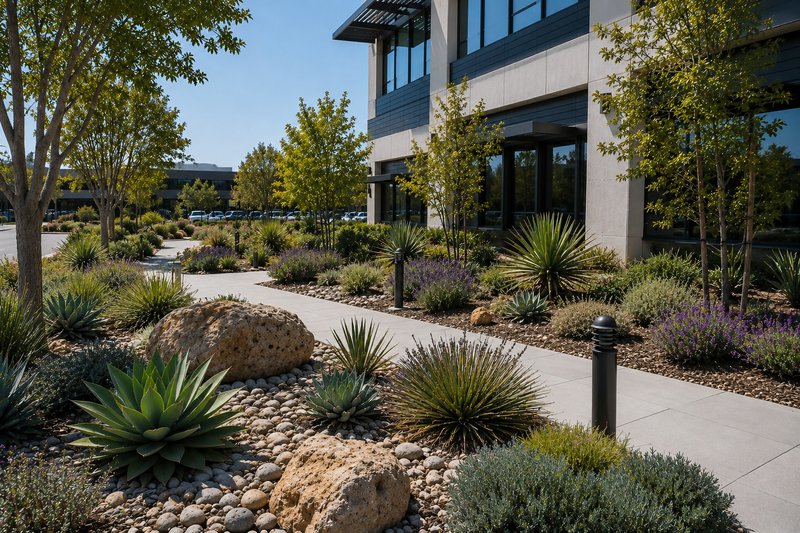
Where Water Efficiency Actually Starts on Site
Water efficiency starts with decisions made before anything is installed on-site. The way a landscape is laid out will shape water demand for years.
Hydrozoning organizes that demand by grouping plants with similar water needs into shared zones. Grouping them this way prevents overwatering the areas that never needed it.
Soil rarely behaves the same across an entire property, and those differences shape the layout. Reading them early prevents planting choices that fight the ground instead of working with it.
Layout design plays a quieter role but becomes obvious during maintenance. When circulation and planting zones are planned well, crews move faster and waste less time on avoidable corrections.
Irrigation systems connect everything into a single operating structure. When designed well, they deliver water where it is needed without overlap or loss.
Water Systems Don’t Stay Static After Installation
Water systems do not behave the same way through the year. Weather shifts, soil conditions change, and irrigation demand follows those patterns.
Ongoing oversight matters more than the initial design alone. Small inefficiencies stay hidden until they start affecting plant health or water use.
- Monitoring irrigation zones to catch uneven distribution early
- Adjusting schedules as weather and seasonal demand change
- Checking system components for leaks or performance loss
- Reviewing site conditions for dry or overwatered areas
- Tracking usage patterns for compliance and operational planning
Regular checks create a calmer rhythm across commercial properties and cut down on surprises. They also keep landscape performance consistent from one season to the next.
What Healthy Soil Really Changes About Performance
Soil often decides how efficiently a landscape manages water. When its structure is weak, irrigation systems do more work than they should without solving the real issue.
Regenerative practices change that. By restoring the soil's biological activity, they help the ground hold moisture and ease the load on irrigation during dry stretches.
As the soil strengthens, plants respond. Roots grow deeper, which helps a landscape stay steady through heat and stretches of limited water.
Plant selection feeds that stability too. Plants matched to their site establish faster and need fewer corrections after planting.
The result is a landscape that reacts less to swings in weather. It keeps its look even as water availability changes from season to season.
Why Water Compliance Shapes Every Design Decision
Water compliance now sits inside the structure of commercial landscape planning. It shapes how systems are designed and how they run long after installation.
Early design decisions set whether a site runs smoothly or needs constant tinkering. When soil, irrigation, and planting are designed as one system, performance gets easier to predict. In one large Southern California district, clearing nonfunctional turf could save close to 300,000 acre-feet of water a year. An acre-foot roughly fills a football field a foot deep, so the savings are real.
The payoff is quieter operations. Water use, plant health, and upkeep stop pulling against each other.
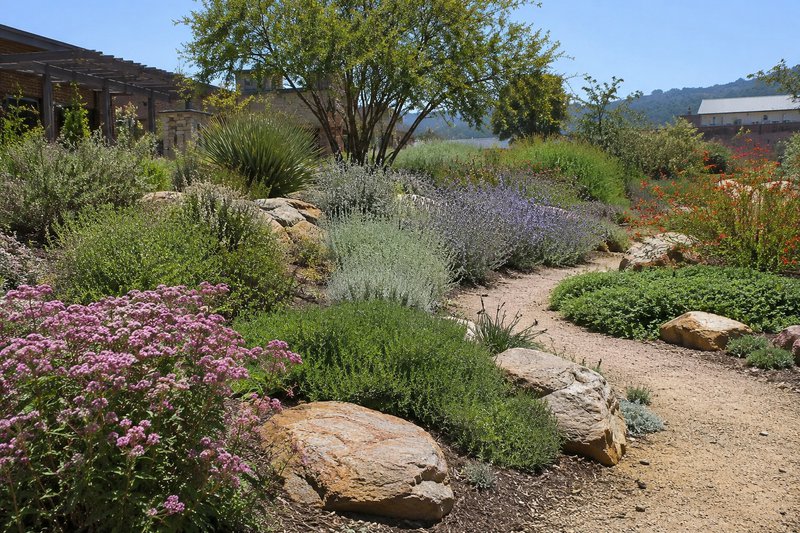
Keeping Systems Aligned as Conditions Shift
Compliance does not stay fixed once a system is installed.
Conditions change, and setups need regular review to stay on track. Periodic evaluations catch performance drift before it grows into something bigger. Skip them, and small problems pile up out of sight.
Good documentation grounds decisions in how the site behaves, not guesswork. It shows how systems change across seasons. Larger irrigated properties must certify their water compliance to the state every three years, and lapses can cost up to a thousand dollars a day.
Clear records keep those adjustments deliberate instead of rushed.
Sustainable Landscape Management: The Day-to-Day Operations
Sustainable management connects water use directly to how a landscape actually performs on site. It shows up in day-to-day decisions more than it does in planning documents.
Monitoring tools show teams how water moves across different parts of a property. Visibility like that turns guesswork into something crews can act on during a normal shift. When these habits are part of routine work, crews spend less time redoing the same fixes.
- Reading each morning's site conditions before setting the day's watering
- Choosing recycled water or captured rain where a zone allows it
- Logging what changed so the next crew starts with the full picture
- Flagging turf that no longer serves a purpose as a candidate for conversion
- Keeping every site to the same standard so quality does not drift between them
Habits like these keep quality even across a portfolio, so a rough season shows less on the ground. Sites hold up well even when the weather does not cooperate.
Creating Landscapes Aligned With California’s Water Conditions
California now asks landscapes to be built for long-term function, not just appearance. Water compliance shapes both the planning and the day-to-day performance that follows.
Gachina Landscape Management brings design, maintenance, and water strategy under one coordinated approach. Coordination like that keeps a site steady as conditions change.
Plan for water compliance from the start, and the landscape becomes far easier to run. To keep your property ready as AB 1572 phases in, talk with Gachina Landscape Management about a consultation.


